
Prime Minister Benjamin Netanyahu said Israel would respond with overwhelming force if Iran attacks its territory, as Tehran continues strikes on shipping and regional targets despite a recent ceasefire.
Speaking at a conference in the Negev city of Dimona on Tuesday, Netanyahu warned Iran's leaders not to expect a repeat of Israel's previous response. "Do not expect a repeat of what happened before, because there will be no repeat," he said. "The previous response was powerful enough, but any further attempt to harm us will be met with a different response — far more powerful."
Israel struck Iranian petrochemical facilities in southwest Iran on June 8 in response to Iranian missile attacks. A ceasefire was quickly reinstated under U.S. pressure after that exchange.
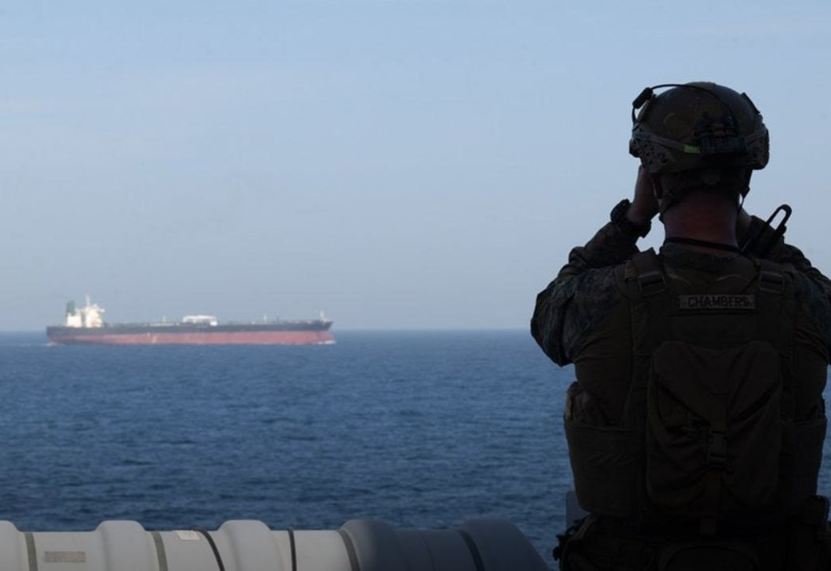
The warning comes as Iran has escalated military action across the region. According to Reuters reporting, Iran struck three commercial oil tankers in the Strait of Hormuz on July 7, prompting U.S. strikes against dozens of Iranian military sites. Iran then launched missiles and drones it said hit 85 U.S. military sites in Bahrain and Kuwait. Early Tuesday, Iran targeted Bahrain, Jordan, and two tankers associated with the United Arab Emirates.
The U.S. launched strikes on Iran early in the morning, hours after President Donald Trump said Washington was "reinstating" a blockade on Iran in the Strait of Hormuz. Iran responded with attacks that killed one mariner and wounded eight others. The UAE threatened to retaliate against Iran, potentially drawing the Gulf nation back into fighting with Tehran.
Hours after the U.S. said it ended its campaign of strikes, the Iranian city of Bushehr on the Persian Gulf was hit in at least four locations, according to the state-run IRNA news agency. Explosions were also reported near the port city of Bandar Abbas and on Iran's Gulf island of Qeshm. Iran blamed the United States for the attacks, though it remained unclear who was responsible.
Trump announced a reversal of plans to charge a 20 per cent fee on cargo going through the Strait, saying instead that Middle Eastern countries would make investment and trade deals with the U.S. Trump claimed oil is "flowing like never before" out of the Strait of Hormuz thanks to U.S. military efforts.
In Layman's Terms
The Strait of Hormuz is a narrow waterway between Iran and Oman through which roughly one-fifth of all traded oil and natural gas passes globally. For decades, ships from around the world have moved freely through it under an international traffic separation program.
What's happening now: Iran has been attacking commercial ships in the strait and threatening to close it entirely. This is part of an escalating cycle. The U.S. and Israel launched military strikes on Iran starting in February. Iran responded by attacking ships and threatening to block the strait. A ceasefire was reached in April, but it has broken down. Iran is now attacking ships again, the U.S. is striking Iranian military sites in response, and the cycle continues.
Netanyahu's warning means Israel is saying: if Iran attacks us directly, we will hit back much harder than we did in June. Iran, meanwhile, appears focused on controlling the Strait of Hormuz and demonstrating that power to the world, according to analysts cited in the reporting.
There's also a second threat emerging. Iran is signalling it could use its Houthi allies in Yemen to close the Bab el-Mandeb Strait, another vital shipping lane linking the Red Sea to the Gulf of Aden. A senior Yemeni official warned that closing both straits simultaneously could send oil prices to $200 a barrel.
Why This Matters
Disruptions to the Strait of Hormuz directly affect global energy prices and the cost of goods shipped worldwide. When Iran attacks tankers or threatens to close the strait, shipping companies reroute vessels around southern Africa, raising transport costs for consumers everywhere.
For the region, the escalation raises the risk of a wider conflict. Netanyahu's stronger warning suggests Israel is prepared for a more severe response if attacked. Iran's continued strikes and threats suggest it is willing to risk breaking the ceasefire to demonstrate control over critical shipping lanes.
For the U.S., the breakdown of the memorandum of understanding signed in April — which Trump now suggests may be "over" — complicates efforts to manage the conflict. Trump has shifted from calling Iranian leaders "very rational people" and "nice to deal with" to calling them "scum" and "vicious, violent people."
What We Still Don't Know
It remains unclear whether Iran will actually follow through on threats to close the Bab el-Mandeb Strait or whether it will use the Houthis to do so. Analysts describe this as a potential "last major reserve" for Iran, suggesting it may be held in reserve rather than deployed immediately.
The source material does not confirm who struck the Iranian cities of Bushehr, Bandar Abbas, and Qeshm on Tuesday, though Iran blamed the U.S. It is also unclear whether Trump's announcement of trade and investment deals instead of a 20 per cent fee represents new commitments or repackaging of existing ones.
Finally, it is unknown whether the ceasefire can be restored or whether the current escalation will continue to spiral.
Sources: Times of Israel, Times of Israel, Times of Israel



Comments
No account needed — just choose a display name. Comments are moderated; if one is removed, the reason is shown.
No comments yet — be the first to share your thoughts.