Ukraine launched hundreds of drones at Moscow for a second consecutive day, killing three people in the region and disrupting airports, as Russia's air defences struggle to stop the intensifying assault.
More than 350 drones targeted the Moscow region starting at 8:30 p.m. Sunday, according to Moscow Mayor Sergei Sobyanin. Russian air defences destroyed 50 of the unmanned aircraft as they approached the capital, Sobyanin said Monday on Telegram. The attack followed an intense wave on Sunday, when about 300 drones targeted the Moscow region over the previous 24 hours.
In the Moscow region, 81 drones were shot down or electronically jammed overnight, according to Governor Andrei Vorobyov. The attack injured five people and damaged multiple residential buildings. Moscow's airports faced repeated disruptions since Sunday morning, with multiple flights cancelled or delayed because of the drone attacks and temporary airspace restrictions.
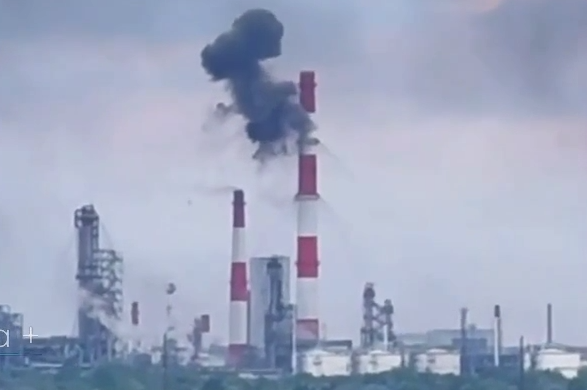
Ukraine also targeted Russian energy infrastructure and grain-export routes over the weekend. Ukraine's General Staff said its forces struck the Syzran oil refinery on Sunday, causing a fire at the facility. Ukraine also said it has hit 90 vessels since July 6, though it did not specify where the attacks occurred. Russia reported multiple strikes on ships in the Sea of Azov since Friday.
In response, Russia targeted Ukraine's Black Sea ports over the weekend. On Monday, the Russian Defence Ministry said its forces carried out overnight strikes on infrastructure in Chornomorsk, one of Ukraine's three main Black Sea commercial ports in the Odesa region. The ministry said the targets were facilities used to unload and store military cargo and fuel, though Bloomberg could not independently verify those claims.
In Layman Terms
Ukraine is sending large numbers of unmanned drones — aircraft with no pilot on board — to attack Moscow and surrounding areas. On Sunday and Monday, more than 350 drones flew toward the Russian capital in a single night. Think of it like a swarm of remote-controlled aircraft.
Russia has air-defence systems designed to shoot down or jam these drones before they reach their targets. On the most recent night, Russian defences destroyed or jammed 81 of the incoming drones. However, some still get through. The attacks have killed people, damaged homes, and forced airports to close temporarily because it is unsafe for planes to fly.
This is part of a broader conflict over shipping and energy. Ukraine is attacking Russian oil refineries and ships carrying Russian exports. Russia is attacking Ukrainian ports that handle grain and other goods. Both sides are trying to disrupt the other's economy and military supply lines.
Why This Matters
The drone attacks are causing real disruption to Moscow's daily life. Airports are closing, flights are being cancelled, and residents are seeing thick black smoke over the city. Some areas have reported toxic rain. This is unusual for a major capital city and shows how the war is reaching civilians far from the front lines.
The attacks are also affecting Russia's economy. Oil refineries are being damaged, which can lead to fuel shortages. Ships carrying Russian exports are being hit, disrupting trade. These economic pressures add to the strain of the war.
For ordinary people in both countries, the escalating attacks mean less reliable transportation, higher energy costs, and increased uncertainty about safety.
What We Still Don't Know
The source material does not say how many drones Ukraine has or how long it can sustain these attacks. It is unclear whether Russia's air defences are improving or whether Ukraine is simply sending more drones than before. The exact damage caused by the attacks on Russian oil refineries and the scale of fuel shortages in Russia are not specified. It is also unknown how long Moscow's airports will remain disrupted or what the full economic impact of these attacks will be.
Sources: Financial Post






Comments
No account needed — just choose a display name. Comments are moderated; if one is removed, the reason is shown.
No comments yet — be the first to share your thoughts.